Saturday, July 5, 2014

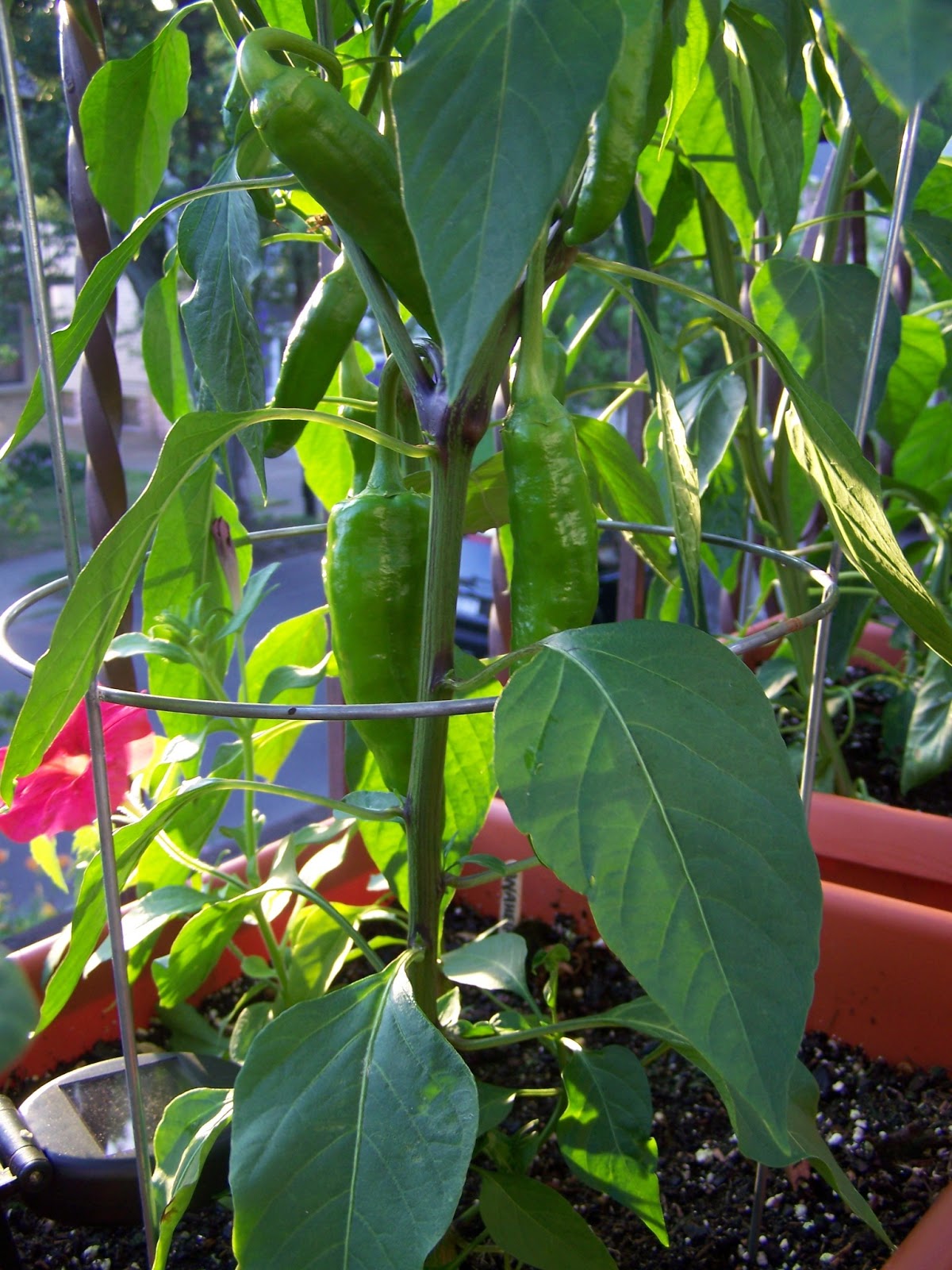
A Weekend Garden Tour

For the weekend update, let's take a quick tour of the garden!

Peppers and Tomatoes

Looking the other direction toward the door end of porch

Lemon and Marketmore cucumber


2nd planting of kale starting to take off (it was a very windy day as you can see from peppers!)

1st kale planting

3rd season for this rosemary plant! (started from seed in February of 2012)

Petunias


Until next time, happy gardening!

Thursday, July 3, 2014

Crop List for 2014!


After a long hiatus, I’ve decided to re-launch Captive Roots for the 2014 season! The garden already loves the heat and sunshine we’ve been getting this summer, and we just harvested our first batch of chard the other day! My goal for the summer season is to update the blog 2-3 times per week, so check back often!

Here is the list of crops for the 2014 season:

Peppers

Variety
Number of Plants

Container Size
Cayenne
2
5 gallon
Jimmy Nardello
3
2 plants in one 7 gallon, 1 w/ an extra hot paprika in a 5 gallon pot
Hot Paprika
5
4 in a 12 gallon pot, 1 w/ the extra Nardello as mentioned above
California Wonder
2
7 gallon
Poblano
2
6.5 gallon
Thai Chili
2
5 gallon
Black Hungarian
3
6.5 gallon
Orange You Sweet
2
5 gallon
Cute Stuff Gold
2
5 gallon
Lipstick
2
5 gallon

Of these pepper varieties, I have grown California Wonder and Poblano, both of which produce heavily and do quite well in containers. The other 8 are new to me!

 Tomatoes

Variety

Number of Plants
Container Size
Chadwick Cherry
2
7 gallon
Emerald Evergreen
2
12 gallon
Blue Beauty
2
12 gallon
Roma
2
12 gallon
Rutgers
2
12 gallon

Of these tomato varieties, the only one I have grown before is the Roma. I did have one evergreen plant in a mixed seed pack a few years ago, but I’m not sure if it was this exact variety (which is why I would never buy a mixed seed packet again!)

I am especially excited to see how the Blue Beauty turns out! Look for updates on those throughout the summer. 


Blue Beauty tomato on 7/2/14

 Cucumbers

Variety

Number of Plants
Container Size
Sikkim Cucumber
3
7 gallon
Marketmore Cucumber
3
7 gallon
Lemon Cucumber
3
6.5 gallon

Cucumbers have always been one of my favorite crops to grow. There is nothing like a crisp homegrown cucumber on a fresh salad! However, as you probably know if you’ve read the blog before, I have been fighting powdery mildew each year and each time it is more virulent than the last. Typically cucumbers last until late July/early August before they are completely killed off. Last year I was able to keep them alive until mid-August by using the milk/water combo. However, this year I switched away from Straight 8 (which apparently is one of the most susceptible to powdery mildew) and to the Marketmore, which is a resistant variety.

I’m excited to see how the Sikkim comes out. I was looking through the Baker Creek catalog and saw this bizarre, brown, almost football shaped cucumber and said “I have to try that!” I have no idea how it will do with the mildew or how well it will produce, but the plant is huge already and has a ton of flowers, so I should get a bunch!

Sikkim Cucumber on 7/2/14
 
Eggplant

Variety

Number of Plants
Container Size
Long Eggplant
2
6.5 gallon
Black Beauty
1
5 gallon

Last summer these long eggplants produced like crazy, and the Black Beauty is always an amazing plant. They produce huge eggplants that stay tender and delicious.

Cooking Greens

Variety
Number of Plants
Container Size
Kale
3
6.5
Perpetual Spinach (chard)
5
6.5
Rainbow Chard
5
6.5
Rainbow Chard #2
5
6.5
Kale #2
4
7 gallon long box

We use cooking greens several times a week, so we grow a lot. This number of planters allows for 2 people to eat greens from the garden 2-3 times a week without running out or depleting the plants too much.

Of these, the perpetual spinach is a new one to us. We just had it the other day and it was delicious! It is a variety of chard, but looks and tastes a lot like spinach. Look for an in-depth post about this neat cooking green in a couple of days!

Our first kale harvest of the season!

 
Herbs

Basil
Oregano
Catnip
Thyme
Rosemary
Dill
Sage
Tarragon
Chives
Mint
Parsley
Cilantro

The herbs are one of the most utilized parts of the garden, as I typically use at least one type of herbs every night when cooking dinner, and often use several. All of these herbs take up very little space (aside from the basil and oregano, which I am growing in 7 gallon boxes in order to dry at the end of the season for winter). If you just wanted enough basil to use from time to time, 3 plants would be plenty.

Basil (and the garden hose!)
 
Flowers

Petunia
Coxcomb
Marigolds
Button Zinnias

I love petunias, so I always start a bunch from seed. These flowers really brighten up the porch! All stay fairly small and are well suited to containers.


Zinnias and marigolds
 
Citrus Trees

Meyer Lemon
Lime

These trees were purchased last fall and spent the winter inside. Neither was particularly happy about doing so, and they are just starting to leaf out and look better now. Look for citrus specific posts in the near future!

 Reading this list, it is amazing how much you can fit into a small space. Our porch is 24 feet long by 8 feet wide, and these plants occupy the outer rim of the entire porch, aside from right against the house, where we have our chairs and a small outdoor table. This leaves the entire middle of the porch open, and we typically have plenty of room to enjoy the porch without feeling like plants are right on top of us. In fact, the green wall provides a great deal of privacy during the summer!

Once this garden gets going, we don’t need to buy herbs, cooking greens, cucumbers, eggplants, tomatoes, or peppers until fall. This year I’m hoping to freeze and dry the peppers (depending on variety) so that we can enjoy them all winter as well.

Until next time, happy gardening!


Tuesday, August 6, 2013

Preventing Powdery Mildew on Cucumbers and Squash


It’s been a while since my last post (this summer has gone by in the blink of an eye!) so I thought I would address my ongoing battle with powdery mildew. Powdery mildew and I have a history. Saying that I don’t like it is too passive—it’s more of a profound feeling of hatred! For whatever reason it seems particularly virulent here, and every year it completely wipes out my cucumbers and squash by August 1st or so. Any type of resistance I offered in the form of sprays and treatments was completely futile. When you smile while reading the description of a powdery mildew product because it states that the spores’ cell walls rupture upon contact (fungus can feel pain, right?), you know it is getting to you! This year I was determined to turn the tide, and I might have finally found a cheap, safe, and fairly effective solution.

Last summer's sad cucumbers... Powdery Mildew 1, Me 0
The first thing to realize is that 100% effective treatment/prevention methods do not appear to exist. The mildew will come if you are in an area where it is prevalent. It’s just a given around here. With that in mind, the goal becomes control and mitigation, so that whatever mildew you end up getting in the garden can be treated without killing the plants.

My approach this year was to begin prevention measures as soon as the plants got true leaves. Do not wait until you see the white spots on your plants’ leaves! When it comes to powdery mildew, not letting it become established is key. After reading hundreds of articles and websites about preventing powdery mildew, I kept coming across the now fairly well-known milk and water spray. Given that there aren’t very many commercial products that a home gardener can buy (or would want to apply to a crop that is going to be eaten) I thought I would give it a try. I admit I was skeptical, since many of these organic solutions turn out to be useless or even harmful. But given the utter futility of growing cucumbers here in past summers, it was worth a try.


This year's cucumbers... much better!
Here is my regimen. I sprayed once a week with a 50/50 mixture of skim milk and water. I used skim simply because that’s what we use, so we always have it on hand. Also, the milk fat adds nothing to the preventative nature of the spray, and would leave behind a nasty residue that would spoil in the sun. I sprayed with this mixture until the plant was completely soaked, making sure to spray the undersides of leaves as well as the tops. Interestingly, many of the sites recommend spraying on a sunny day, as there is something about the milk and sun that causes a chemical reaction that results in a strong fungicide. I just wouldn’t spray on a very hot day (you could wait until early evening to avoid leaf burn). I began using a handheld mister bottle, but that quickly became a pain as the plants became large, so I switched to a handheld pump mister bottle (about $6 at Home Depot).

I found that this mixture was pretty effective at keeping powdery mildew away. I sprayed the three types of cucumbers I am growing (all in different containers) as well as the green and yellow zucchini. Effectiveness varied as seen below. Please note that this is just my unscientific (but reasonably accurate) guess as to how effective the spray has been, based on experience in previous years.


Plant Type

Effectiveness (% reduction in mildew)
Straight 8 Cucumber
85-90%
Lemon Cucumber
85-90%
Bush Champion Cucumber
50%
Yellow Zucchini
90-95%
Green Zucchini
90-95%

Notice the Bush Champion number. I am only guessing on this one, since this is the first season that I’ve grown it, but it still had a pretty bad case of powdery mildew. Perhaps it would have been completely killed by it had I not sprayed; I’m just not sure.

Mildew in the Bush Champion container... EVIL! Evil I tell ya!
Either way, the milk solution kept it at bay on the other plants pretty well for the most part. Only having about 15-20% of the mildew I would normally have has meant that the plants are still alive and producing in August! It also makes manual removal of affected leaves a viable option, since it doesn’t involve stripping the vines.
 
Still, I was looking for a knockout blow. I researched a great many alternatives to employ, and I came upon two: neem oil, and a product called Green Cure. Green Cure is tough to find, and the only nursery around here that had it was closed on Sunday, which is the one day I had free this week to spend any amount of time messing with spraying plants. It’s also the one that mentioned exploding spores, so I will definitely be picking some up for my next spray. Still, for the time being I went with neem oil. I sprayed it in place of my normal milk mixture this week, and it seems to have killed about 80% of the mildew on the Bush Champion cucumber (I  manually removed the affected leaves on the other plants, but I did spray them as well as a preventative measure).

All in all, I found the milk spray to be very effective in preventing powdery mildew, understanding that 100% prevention is unrealistic in this area. Also, the milk is mostly a preventative measure—not curative. It creates an environment on the leaf that is not hospitable for powdery mildew spores to take hold. However, once they set in you need to call in the reinforcements! Manually remove the most affected leaves (being careful not to strip your cucumber vines of too many leaves) and then spray with a fungicide as needed.

Lemon cucumbers! August and still going strong!
If I have had reasonable success using these methods, I would assume that anybody can. I had never seen powdery mildew before I began trying to grow cucumbers here. I don’t know if living in the city makes it worse, but there are houses down the street with bushes in front that are completely white by mid-August with the stuff. Still, my squash is nearly mildew free, whereas it would normally be completely white with not just spots but full-blown leaf coverage by now. The fact that it is August 6th and there are still green, healthy cucumber vines on the porch is a major victory in itself.
 
Until next time, happy gardening, and have no mercy on powdery mildew!

Wednesday, July 24, 2013

A Photo Tour of the 2013 Garden!

It's been a while since my last update, and the garden has been busy!

One thing I enjoy is that I started everything in the garden (with the exception of the mint and chives) from seed this year. Petunias were the toughest for me last year, but this year they came up with a vengeance!

We recently harvested our first few cucumbers and two dinners worth of cooking greens (one bunch of rainbow chard and one bunch of kale). Both were delicious, and if you like kale there is nothing better than fresh, tender, garden kale. I grew the dwarf blue variety and it not only stands up to the heat very well, but also lacks the bitterness that other kale varieties can develop in the heat of summer.

Speaking of cucumbers, I'm growing 4 types this year in an attempt to find a variety that can stave off the mildew plague we get every summer. I'm growing an heirloom called delicatessen, straight 8, lemon, and bush champion. So far I've harvested 3 straight 8, 2 lemon, and 1 bush champion (see picture below).

Rainbow Chard and Straight 8 Cucumbers

Kale, Tuscan Kale, jalapeno, and 3 types of cucumbers (from left to right): straight 8, bush champion, lemon
As I mentioned, I have struggled mightily for years with powdery mildew on my cucumbers and squash. This year, I've been spraying the plants with a mister bottle once a week using a 50/50 mix of skim milk and water, and so far it has been kept 95% at bay. I say 95% because powdery mildew is a bit like Michael Jordan: you can't stop it; you can only hope to contain it! Also, you must begin spraying long before you see any signs of mildew, as it is more of a preventative measure than a curative one. So far so good in that department, as I've only noticed a few spots here and there on isolated leaves, which I prune immediately. For comparison, by late July last summer I had lost all of my cucumbers and squash to the mildew, which covered the entire plants and eventually killed them. For whatever reason, this is a major problem in Western New York, so it's a battle you have to keep up with by spraying every single week.

Without further ado, here is a quick photo tour of the garden! Everything is doing well, even the plants in my homemade soil mix. Until next time, happy gardening!

Looking one direction
Looking other direction 

Bush champion

Bush champion

Petunias... the seeds came up this year!

Peppers!

Jalapenos 

Anaheim peppers

Long eggplants

Pablanos

Roma tomatoes

Abe Lincoln tomatoes

Green zebras

Sweet 100s

Purple tomatillo

Roma tomatoes 

Basil trio

Mint and Rosemary

Bush champion and lemon cuke, chard


Thursday, June 13, 2013

A Rainy Day Garden Update


It’s been an incredibly busy month (thus the lack of updates lately) but the garden is starting to really grow in now! If it stops raining for 5 minutes I hope to get all the tomato cages in before the plants get too wild.

The garden last weekend
Since I started the dill and cilantro early, I am already starting new cilantro and dill seeds, as both plants have started to flower. It’s always a good idea to re-seed cilantro every couple of weeks as the season goes on so that you always have a nice supply. Once it turns “dilly” and flowers it loses most of its taste. You can still use it, but it will lack the punch it once had. 

Swiss Chard!
In other garden news, it appears that my recycled soil mix is working just as well as the Miracle Grow! The peppers, eggplant, cucumbers, flowers, herbs, and squash are in the recycled mix, and all are doing very well. Now we just need some warm temperatures and sunshine.

Eggplant in the recycled mix
Speaking of temperatures, I usually like to wait to fertilize until a day or so before a nice warm and sunny spell, which has proved difficult lately since it has been about 65 degrees, cloudy, and rainy just about every day lately. Hopefully things will dry out a bit so I can apply some more Tomato Tone sometime in the next few days. Also, I plan on being very aggressive in battling powdery mildew this year by spraying the cucumbers and squash with a 50/50 milk/water spray. More to come on that soon though!

I finally got petunias to grow from seed this year!
 Until next time, happy gardening!